Masko: A Modern Sans Serif Font for Digital Design
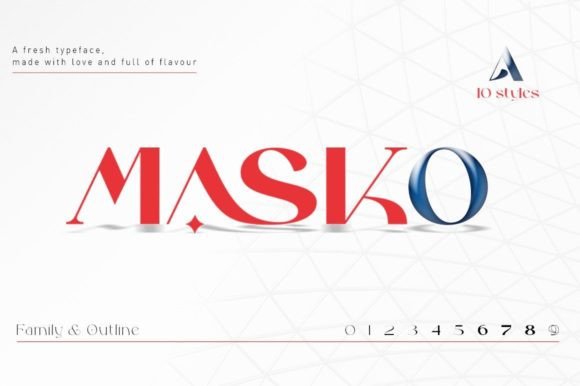
As a UI designer who ships landing pages, SaaS dashboards, and conversion-optimized online stores, I test dozens of fonts every month—but few deliver the balance of elegance, legibility, and digital versatility that Masko does. This sans serif typeface isn’t just clean; it’s intentionally calibrated for screen readability, visual hierarchy, and brand tonality across responsive layouts. Its minimalist structure—open apertures, even stroke contrast, and generous x-height—makes Masko perform exceptionally well at small sizes on mobile buttons, in hero section headlines, and as subtle accent typography over image overlays.
Masko for Website Headers and Hero Sections
When your homepage headline is the first impression—and often the only one—Masko delivers authority without austerity. As a sans serif font, it avoids the coldness of ultra-thin grotesques while staying far from the dated neutrality of older system fonts. Use Masko in bold or semi-bold weights for H1s above full-width banners: its even rhythm guides the eye left-to-right without visual fatigue, and its clean terminals prevent blurring on mid-density screens. On dark backgrounds or gradient overlays, Masko retains crispness where many fonts soften or pixelate—especially critical for high-conversion hero sections on coaching websites, course sales pages, or boutique e-commerce brands.
Masko for Landing Page Call-to-Action Buttons
Masko excels where typography must convert: CTAs. Unlike decorative display fonts that sacrifice scannability, Masko maintains clarity at 14–16px—even with tight letter spacing and minimal padding. As a sans serif option, it pairs naturally with neutral UI kits and doesn’t compete with iconography or micro-interactions. For SaaS trial buttons, “Get Started” banners, or email capture forms, Masko communicates confidence and simplicity. Test it at 500–600 weight with 1px tracking: the result feels intentional, not generic. Bonus: its consistent baseline alignment prevents jitter during hover states or loading animations—a subtle but measurable UX win.
Masko for Online Store Banners and Product Pages
E-commerce designers know that product banners live in tension between aesthetic polish and functional clarity. Masko resolves that conflict. As a sans serif font built for modern fonts usage, it scales cleanly from desktop hero carousels down to mobile product cards. Use light or regular weights for descriptive subheadings (“Handcrafted • Sustainable • Ships in 48h”), and reserve bold weights for limited-time offers or value props (“Free Shipping Over $75”). Because Masko avoids excessive contrast or quirky terminals, it renders reliably across browsers—including Safari’s sometimes finicky font smoothing—and stays legible against textured backgrounds or lifestyle photography.
Masko for Blog Headers and Editorial Web Content
For content-heavy sites—think newsletters, knowledge bases, or founder blogs—Masko serves as both a strong heading font and a refined display option for pull quotes or section dividers. While not intended as body copy (stick with a highly legible, open-source sans like Inter or Open Sans for paragraphs), Masko shines as an H2/H3 anchor: its geometric precision creates clear visual breaks, and its warmth invites scanning rather than intimidating readers. Pair it with a gentle serif like Playfair Display for bylines or intro paragraphs, and you instantly elevate editorial credibility—without sacrificing speed or accessibility. As a sans serif typeface, Masko also supports multilingual Latin-script content out of the box, making it viable for global-facing blogs or SaaS documentation.
Masko for Social Media Graphics and Digital Ads
When your Instagram carousel or LinkedIn ad has 0.8 seconds to earn attention, Masko delivers instant recognition. Its minimalist structure reads instantly at thumbnail size, and its clean letterforms hold up when compressed into 1080×1080 or 1200×628 formats. Unlike condensed sans serifs that collapse into illegibility, Masko preserves spacing integrity—even at 24px on mobile previews. Use it for short, benefit-driven headlines (“Launch Faster. Scale Smarter.”) or branded quote graphics. As a sans serif font, it aligns seamlessly with platform-native UI aesthetics, avoiding the “designed elsewhere” disconnect that harms trust in paid social campaigns.
Masko for Wedding Invitations and Elegant Branding
Yes—Masko works beautifully beyond the screen. Its restrained elegance makes it ideal for luxury service brands, creative studios, and wedding-related digital assets: RSVP pages, digital save-the-dates, or branded Zoom backgrounds. As a sans serif font, it conveys modern sophistication without leaning into sterility or trendiness. When paired with delicate line art or muted palettes, Masko becomes part of the brand voice—not just decoration. For client-facing deliverables like pitch decks or brand guidelines, licensing Masko ensures consistency across PDF exports, web embeds, and social thumbnails. It’s a premium font that earns its place in high-stakes branding contexts.
Masko Font Pairing Strategies for Web Design
Pair Masko purposefully—not decoratively. Its strength lies in contrast: use it as the dominant display face alongside a highly legible, low-contrast sans for body text (e.g., Inter, Lato, or system stacks). Avoid pairing with other geometric sans serifs—too much similarity flattens hierarchy. Instead, try Masko headlines + serif body (like Merriweather or Cormorant Garamond) for editorial sites, or Masko section titles + monospace accents (JetBrains Mono, Fira Code) for developer-focused products. All fonts should serve function first: if your pairing slows scanning or adds cognitive load, simplify. Masko thrives when it’s the clear typographic leader—clean, confident, and quietly authoritative.
Licensing Masko for Commercial Web Projects
Before deploying Masko on client sites, online stores, or SaaS platforms, verify commercial licensing. Most reputable fonts vendors offer webfont licenses covering unlimited domains, auto-hosted CDN delivery, and WOFF2/WOFF support—critical for Core Web Vitals. Confirm whether the license includes variable font support (if offered), multilingual glyphs, and access to stylistic alternates. For agencies or freelancers delivering design systems, choose a license tier that permits redistribution in templates or white-labeled dashboards. Masko, as a sans serif typeface built for digital environments, typically ships with robust webfont files, intuitive CSS variable naming, and fallback-safe weight options—making integration fast and production-ready.